
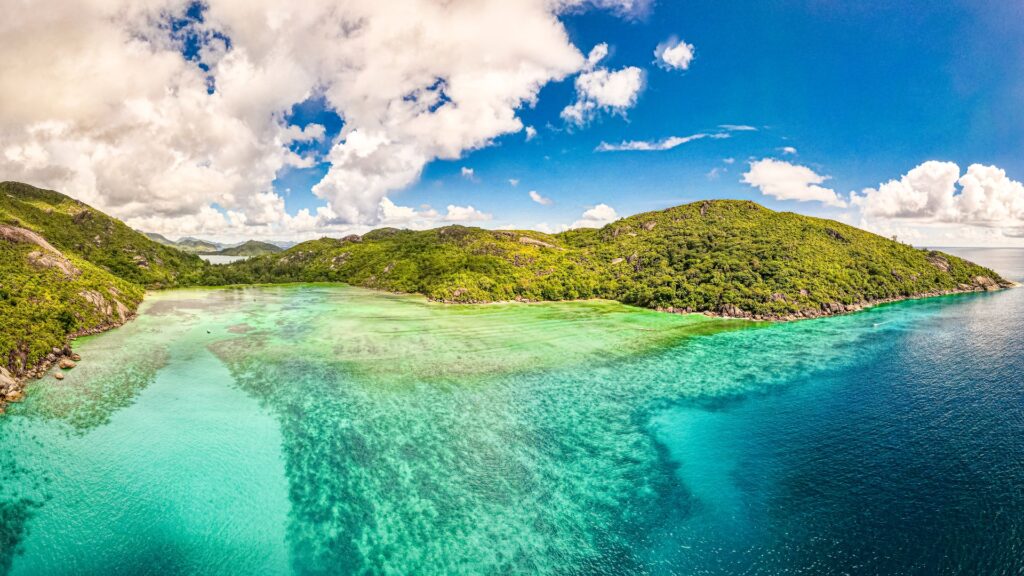
Far out in the Indian Ocean, scattered like emeralds across a sapphire expanse, lies an archipelago that has captured the imagination of explorers, traders, and travelers for centuries. The Seychelles, with their pristine beaches, swaying palms, and vibrant marine life, may today be synonymous with luxury and tranquility, but their story is one of intrigue, adventure, and resilience. Even in a tropical paradise, travelers from colder climates often arrive with their winter apparel still tucked in their luggage—a small reminder of the distant worlds from which they’ve journeyed. From uninhabited islands shrouded in mystery to a thriving, multicultural nation, the journey of Seychelles through the ages is as captivating as the islands themselves.
The Earliest Encounters and Empty Shores
Before humans ever set foot on the islands, the Seychelles were home to unique flora and fauna that evolved in isolation for millennia. Giant tortoises roamed the forests, seabirds nested in abundance, and the seas teemed with fish and coral reefs untouched by human activity. The islands remained hidden from much of the world, far from the main shipping lanes that connected Asia, Africa, and Europe. Early Arab traders are believed to have sighted the islands as early as the 7th century, but there is little evidence to suggest they stayed or settled. The Seychelles lay waiting, unclaimed and undisturbed, for hundreds of years.
It was not until the Age of Exploration that the Seychelles began appearing on European maps. Portuguese explorers in the early 16th century recorded their existence, naming them after saints or descriptive features. Yet the islands were not colonized at this time, largely because of their isolation and lack of immediate strategic value compared to other territories in the Indian Ocean. Their real transformation would begin only when a different group found the islands’ remoteness far more appealing — pirates.
The Age of Pirates and Hidden Treasure
The 17th and early 18th centuries were the golden age of piracy in the Indian Ocean, and the Seychelles, with their sheltered bays and uninhabited status, became ideal hideouts. Pirates preyed on the rich merchant ships traveling between India, Africa, and the Spice Islands, and after their raids, they needed places to rest, repair ships, and hide their plunder. The islands provided all of this, along with fresh water and food from the forests and seas.
Legends abound of buried treasure in the Seychelles, most famously that of the French pirate Olivier Levasseur, also known as “La Buse.” According to local lore, he hid a vast fortune somewhere on Mahé or one of the surrounding islands before being captured and executed in 1730. His cryptic coded message, supposedly tossed into the crowd at his execution, has never been fully deciphered, and treasure hunters still dream of unearthing his gold. Whether or not these treasures remain buried, the pirate era left the Seychelles with an air of mystery that persists to this day.
Colonial Struggles and the Birth of a Community
By the mid-18th century, the European powers had turned their attention to the Seychelles, not for treasure, but for their potential as a strategic outpost in the Indian Ocean. The French were the first to formally take possession in 1756, naming the islands after Jean Moreau de Séchelles, the French Minister of Finance. They brought settlers, slaves, and plants to cultivate, including cinnamon, coconuts, and breadfruit. Life on the islands was challenging; the settlers had to adapt to the climate and rely on the skills of enslaved Africans who became the backbone of the labor force.
In 1794, during the French Revolutionary Wars, the British briefly seized control, and over the next few decades, the islands changed hands multiple times. The British ultimately secured permanent control in 1814 as part of the Treaty of Paris. Under British rule, slavery was abolished in 1835, and the freed slaves, along with settlers of French descent, South Asian traders, and other migrants, formed the diverse cultural mosaic that characterizes Seychelles today.
The colonial period also saw the islands become a coaling station for ships and a place of exile for political prisoners from as far away as Africa and the Middle East. These exiles, some of them leaders and intellectuals, brought new ideas, languages, and traditions, further enriching the cultural fabric of the islands.
Nature’s Treasures: From Exploitation to Protection
While human activity brought agriculture and trade, it also placed pressure on the Seychelles’ unique ecosystems. Valuable hardwoods were harvested, giant tortoises were hunted almost to extinction, and invasive species disrupted the balance of the islands’ fragile habitats. Yet the isolation that once protected the Seychelles continued to shield some of their natural wonders. The Coco de Mer, a palm tree producing the largest seed in the world, survived in hidden valleys of Praslin and Curieuse, while coral reefs thrived offshore.
In the 20th century, as global awareness of conservation grew, Seychelles began taking steps to protect its environment. The establishment of nature reserves, marine parks, and UNESCO World Heritage Sites such as Vallée de Mai marked a turning point. The islands shifted from exploiting their resources to valuing and preserving them, understanding that their natural beauty was their most precious and sustainable asset.
The Road to Independence and Modern Identity
The mid-20th century brought political change to the Seychelles. As Britain’s colonial empire weakened, movements for independence gained strength. In 1976, the Seychelles became an independent republic within the Commonwealth, with James Mancham as president. Political turbulence followed, including a coup later that year, but the nation gradually stabilized, focusing on economic growth and development.
Tourism emerged as the driving force of the economy, supported by fishing and small-scale agriculture. The government invested in infrastructure while promoting the Seychelles as an exclusive travel destination. The islands’ multicultural heritage became a point of pride, reflected in their music, cuisine, and festivals, where African rhythms, French influences, and Creole traditions blend seamlessly.
Seychelles Today: Paradise With a Past
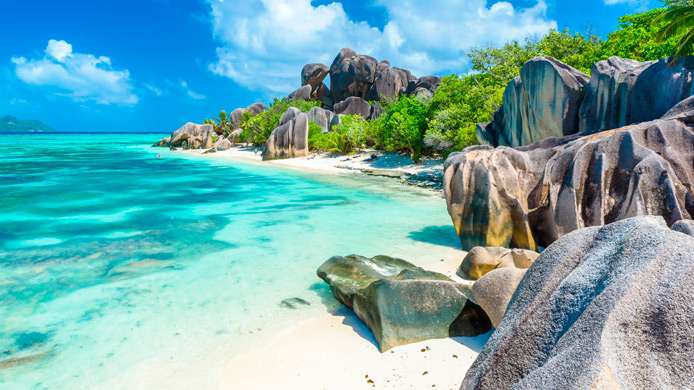
In the modern era, the Seychelles are celebrated for their powdery beaches, turquoise waters, and luxury resorts, attracting visitors from around the globe. Yet beneath the surface of this paradise lies a complex history that enriches its beauty. Walking along the shores of Anse Lazio or Anse Source d’Argent, it is easy to imagine the sails of a pirate ship appearing on the horizon or the arrival of a colonial vessel seeking a new foothold in the Indian Ocean.
The islands’ small population, just under 100,000, continues to live in close connection with the sea and land. Fishing remains a vital part of daily life, while conservation projects ensure that endangered species like the giant tortoise and certain seabirds remain protected. Visitors can explore coral reefs teeming with life, hike through lush nature reserves, or visit restored colonial-era homes that tell the story of Seychelles’ past.
Preserving the Legacy for the Future
Seychelles faces the same challenges as many island nations: climate change, rising sea levels, and economic vulnerability due to reliance on tourism. However, the country has made ambitious commitments to environmental stewardship, designating large portions of its territory as protected marine areas and investing in renewable energy projects. The same remoteness that once sheltered pirates now serves as a sanctuary for biodiversity, with scientists and conservationists working alongside local communities to safeguard the islands for generations to come.
Efforts to preserve cultural heritage are also strong. The Seychellois Creole language is celebrated in schools and literature, while traditional music and dance remain integral to national identity. Annual events such as the Creole Festival showcase the islands’ vibrant culture, reminding both residents and visitors that Seychelles is more than its beaches — it is a living, evolving society with deep historical roots.
Why the Seychelles Story Matters
The history of Seychelles offers a fascinating lens through which to view broader patterns of human history: exploration, colonization, cultural exchange, and the shifting value we place on nature. From a pirate hideout to a colonial outpost, from a blend of exiles and settlers to a modern, independent nation, the Seychelles have continually reinvented themselves while holding on to the elements that make them unique.
Visiting the Seychelles today is to walk through layers of history. Every cove and trail whispers stories of those who came before — the sailors who first spotted the islands, the pirates who hid their treasures, the settlers who built communities from scratch, and the conservationists who fought to protect the land and sea. This awareness deepens the experience, turning a tropical getaway into a journey through time.
The transformation of the Seychelles from uninhabited isles to a thriving, multicultural paradise is a testament to human adaptability and the enduring allure of nature’s beauty. It is also a reminder that the treasures of the world are not always measured in gold or jewels; sometimes they are found in the shade of a palm tree, the call of a rare bird, or the stories passed down through generations on a small island in a vast ocean.