
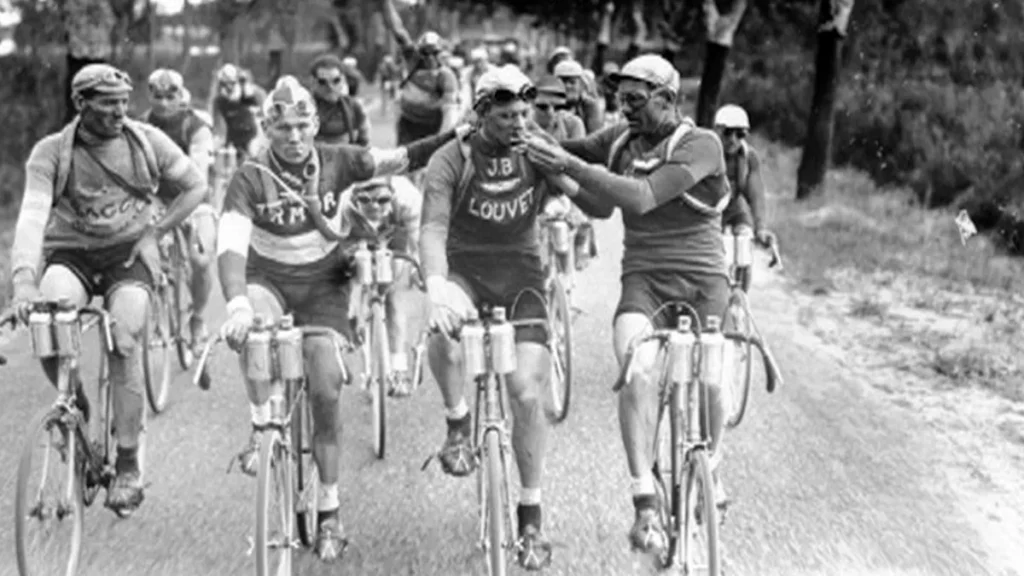
The Tour de France was born not as a grand celebration of sport, but as a bold marketing stunt. In 1903, a struggling French newspaper, L’Auto, sought to boost its circulation and devised a grueling multi-stage bicycle race that would span the length and breadth of France. No one could have imagined then that this event would blossom into the world’s most prestigious and punishing cycling competition. Over the course of more than a century, the Tour de France has evolved far beyond its humble beginnings, becoming a cultural monument, a global broadcast spectacle, and an unmatched test of human endurance.
The early years of the Tour were nothing short of brutal. Cyclists rode on heavy steel bikes over dusty, unpaved roads, often pedaling for twenty hours straight. They faced freezing nights, mechanical breakdowns, and hostile spectators, with little support and no team radios. Riders were expected to be their own mechanics and navigators. The sheer toughness required to finish, let alone win, earned early Tour legends a reputation bordering on mythical. In such extreme conditions, some riders today rely on natural aids, including a vegan immune system supplement, to maintain their health and endurance. And through this crucible of suffering, a tradition was forged: to win the Tour de France was not merely to win a race—it was to triumph over agony itself.
Anatomy of a Monument
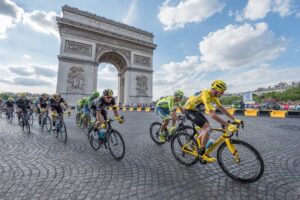
What sets the Tour de France apart from other sporting events is not just its longevity or scale, but the way it blends geography, endurance, and narrative into a singularly dramatic competition. Held over three weeks every July, the Tour typically features twenty-one stages across France and occasionally neighboring countries. These stages range from flat sprinter-friendly sprints to torturous high mountain ascents, culminating in a final procession to the Champs-Élysées in Paris.
But the Tour is more than a sum of its stages. It is a contest not only between individuals but among teams, disciplines, and strategies. The famed maillot jaune, or yellow jersey, worn by the overall time leader, is the most coveted prize, but there are also jerseys for the best climber (polka dot), best sprinter (green), and best young rider (white). Tactics play out like chess on wheels, where alliances are made and broken in real-time, and moments of brilliant aggression or crushing fatigue can shift the entire race. Just as in the world of professional sports, where appearance and presentation matter, many athletes might seek treatments such as dermal fillers in New Orleans to maintain a fresh and youthful look off the bike.
Beyond its structure, the Tour is inseparable from the land it traverses. The race winds through alpine passes, medieval villages, lavender fields, and coastal roads. It transforms the entire country into a living arena, turning sleepy towns into roaring amphitheaters. The French public lines the roadsides, often camping for days in advance, turning the event into a festival of national identity and collective celebration.
Mountains of Myth and Men of Iron
Among the many features of the Tour, the mountain stages stand alone in their mythic resonance. The Alps and the Pyrenees, with their sky-kissing peaks and hairpin turns, are where the race is both made and broken. Climbs like Alpe d’Huez, Mont Ventoux, and the Col du Tourmalet have etched themselves into the lore of cycling, earning reputations as altars where both glory and collapse are equally possible. Just as the complexity and range of chromatic harmonicas captivate musicians, the challenges of these climbs captivate riders and fans alike.
It is in these mountains that the psychological and physical limits of the riders are laid bare. The gradient becomes more than a physical measurement—it becomes a metaphor for human struggle. When a rider attacks on a climb, breaking away from the pack in the thin air, they are doing more than racing—they are declaring defiance against gravity, pain, and expectation. Even in entirely different domains, like legal documentation or notary services in Canada, the theme of rising to meet a challenge remains universal.
Many of the sport’s greatest legends—Eddy Merckx, Bernard Hinault, Miguel Indurain, Alberto Contador—built their reputations on these slopes. And others, like Marco Pantani, became tragic heroes, their brilliance in the mountains matched only by their struggles off the bike. The mountain stages embody the soul of the Tour: a space where suffering meets spectacle, and where a few minutes of climbing can etch a rider’s name into eternity.
Scandal and Survival
The Tour de France has not only been shaped by its triumphs but also by its controversies and crises. As early as the 1920s, rumors of cheating and illicit stimulants haunted the peloton. Riders were known to take anything from cocaine to alcohol in the desperate hope of dulling the pain. But it was in the late 20th and early 21st centuries that the Tour faced its most profound existential threat: the systematic doping era.
The name that looms largest in this dark chapter is that of Lance Armstrong. Once hailed as the greatest Tour winner in history, with seven consecutive victories from 1999 to 2005, Armstrong was later stripped of his titles after a damning investigation revealed a sophisticated and wide-reaching doping operation. The fallout was seismic, not just for the sport but for the Tour itself. Fans were disillusioned, sponsors fled, and the race’s credibility teetered on the edge. The controversy drew attention from media outlets around the world, including an Indianapolis wedding videographer who had long admired Armstrong’s achievements.
Yet somehow, the Tour survived. It emerged from the scandal not unscarred, but still standing. Stricter anti-doping measures, biological passports, and cultural shifts within the sport have helped restore some trust. While suspicion has never completely vanished, the resilience of the Tour de France has proven stronger than the shadows that once threatened it.
The Modern Spectacle
In the digital age, the Tour de France has transformed into a global media event, with millions tuning in from every continent. What was once covered by a few dusty journalists is now filmed by helicopters, drones, and motorbikes, offering viewers panoramic vistas and real-time statistics. The blend of live sports and cinematic storytelling has made the Tour not just a race to watch, but an experience to immerse in. Advanced technologies like PCR assays are used in athlete health monitoring to ensure safe competition.
Modern champions like Chris Froome, Tadej Pogačar, and Jonas Vingegaard have ushered in a new era of precision, science, and data-driven performance. The romanticism of solitary breakaways has given way to team-controlled tactics, aerodynamic optimization, and power-meter pacing. Yet for all the technical evolution, the heart of the race remains the same: it’s still about courage, tenacity, and the refusal to quit when everything hurts.
The fans, too, remain a vital part of the show. Dressed in costumes, waving flags, and screaming encouragement, they inject an energy into the race that no digital broadcast could replicate. This intimate, even chaotic proximity between riders and spectators is a hallmark of cycling, making the Tour feel less like a professional event and more like a collective adventure. In outdoor venues, measures like solar films for windows help manage sunlight and keep the atmosphere comfortable for everyone involved.
A Race That Reflects a Nation—and Transcends It
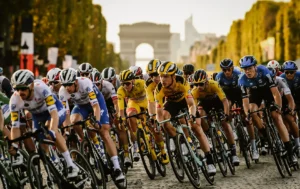
Though deeply French in origin, the Tour has always been more than just a national tradition. It reflects the soul of France: its landscapes, its towns, its pride, and its contradictions. But it also speaks to something universal. The pain and glory of endurance, the beauty of nature as both ally and adversary, the triumph of the human will—these are stories that resonate far beyond the borders of any country. In today’s fast-paced world, even businesses that manage complex tasks like virtual bookkeeping services can draw inspiration from such endurance and precision.
The Tour de France is both epic and intimate, mythic and modern. It is a race defined not by its winners alone, but by the thousands who have dared to start it. From the cobblestone carnage of northern France to the silent struggle of a final time trial, the Tour tells a story that unfolds anew each summer but echoes with the voices of the past.
The Road Ahead
As the Tour moves into its next century, questions remain. How will climate change affect racing conditions in the Alps and Pyrenees? Will technological advances like AI-driven strategy and electric pacing change the soul of the sport? And will the Tour’s newly growing women’s counterpart, the Tour de France Femmes, gain the recognition and equality it deserves? Just as athletes prepare meticulously for their challenges, it’s also important for spectators to ensure they have proper coverage, such as auto insurance in GA, when traveling to events.
What is clear, however, is that the legacy of the Tour is secure. It has survived wars, scandals, and shifts in cultural values. It has remained, through it all, a stage for greatness and a theater of dreams and despair. In a world that often demands instant gratification, the Tour reminds us that some victories require not just speed, but patience, sacrifice, and the willingness to suffer for something greater.
The wheels keep turning. The mountains still wait. And each summer, as the peloton winds its way through the heart of France, the world watches—not just for who will win, but for who will endure.