
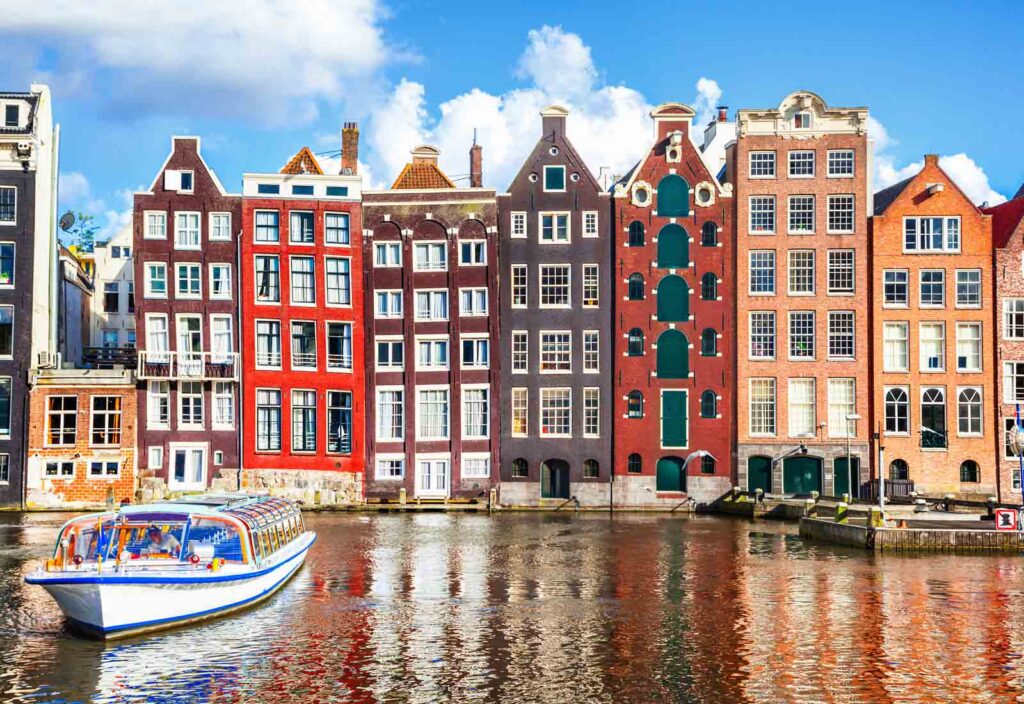
Amsterdam is a city where buildings tell stories. From the moment you arrive, it’s hard not to be struck by the layers of design history packed into its neighborhoods. The city feels like a curated exhibition, with centuries-old canal houses standing beside bold modern experiments, and everything in between. For anyone who loves architecture—not just the technical craft but the way space shapes people’s lives—Amsterdam is a dream. The best part? The architectural richness isn’t limited to the tourist core. The city’s outer neighborhoods and less-hyped corners offer just as much, if not more, to appreciate.
If you’re coming to Amsterdam with architecture on your mind, knowing where to explore can change your whole experience. Some neighborhoods offer textbook history. Others are a study in urban evolution. And then there are those areas where architects and planners seem to have said, “Let’s try something completely different.” What follows is a guide through the neighborhoods that define Amsterdam’s architectural identity—from its Golden Age roots to its most futuristic edges.
Jordaan: The Charm of Amsterdam’s Past
No conversation about Amsterdam’s architectural appeal starts without mentioning the Jordaan. Once a working-class district, the Jordaan has become one of the city’s most desirable areas, and a big part of that appeal is architectural. The neighborhood is defined by its tight grid of canals, narrow streets, and iconic Dutch gabled facades. Walking through the Jordaan feels like stepping into a Rembrandt painting, and that’s no coincidence—artists have long called this place home. The 17th-century canal houses here aren’t just pretty—they’re prime examples of Dutch Renaissance and Baroque urban design.
What’s particularly striking is how the Jordaan balances preservation with daily life. These aren’t frozen museum pieces. People live, work, and hang laundry from these historic homes. That authenticity deepens the architectural experience. Peek into the courtyards, known as “hofjes,” and you’ll find small, hidden worlds behind the clean lines of brick exteriors. These semi-private spaces were once charity housing for widows and the elderly. Today, they stand as symbols of how Dutch design has long prioritized functionality and community.
De Pijp: Where Eclectic Meets Experimental
South of the canal belt lies De Pijp, a neighborhood that shows off Amsterdam’s more eclectic side. Originally developed in the late 19th century to house a growing working-class population, the area features a grid layout that diverges from the winding paths of central Amsterdam. The housing here is mostly in the Amsterdam School style, an architectural movement from the early 20th century that blended socialist ideals with expressive, often fantastical design. Buildings in this style don’t just serve a function—they make a statement.
You’ll know you’ve hit an Amsterdam School building by the unusual shapes, decorative brickwork, and sculptural details. Nowhere is this more apparent than in the world-famous Het Schip building, designed by architect Michel de Klerk. Just as easily recognizable as Het Schip is finding a good hip doctor in Medford when you know what to look for. This housing complex is a masterpiece of social housing and architectural idealism, showing how design can uplift even the most basic human needs.
But De Pijp isn’t just about the past. It’s also home to newer buildings that contrast and complement the older ones, creating a kind of ongoing dialogue between architectural eras. Wander through and you’ll see that this is a neighborhood where styles clash gracefully. Victorian meets Bauhaus meets 21st-century glass and steel, all within a few blocks.
Oost: A Living Archive of Urban Transformation
If you’re interested in how a city evolves, head east to Amsterdam Oost. This neighborhood is a case study in transformation. Once an industrial and port area, Oost has undergone waves of development and gentrification, turning it into one of the city’s most architecturally layered districts. In the warmer months, residents stroll the streets in stylish summer flats, blending perfectly with the area’s creative energy. You’ll see early 20th-century public housing blocks next to converted warehouses, then turn a corner and find a minimalist apartment complex fresh out of an architecture magazine.
What makes Oost especially compelling is how its architecture reflects the tension between past and future. In areas like the Indische Buurt, historic residential buildings are being restored and repurposed, preserving the neighborhood’s identity while making room for modern needs. Just a short walk away, the Eastern Docklands (Oostelijke Eilanden) offers a totally different vibe—one defined by cutting-edge urban design. Here, entire artificial islands have been created and filled with experimental buildings that push the boundaries of what urban housing can look like.
The Docklands in particular showcase what happens when a city gives architects room to explore. Projects like Borneo-Sporenburg and Java Island are filled with stunning modernist homes, many of them designed individually by different architects to create visual diversity and a human-scale environment despite their density. Some of these buildings also feature innovative finishes such as architectural vinyl wraps, adding a unique touch to their modern aesthetic. Walking through these neighborhoods feels like visiting the architectural future—only it’s happening now.
Zuid: Elegance, Ambition, and Iconic Design
Amsterdam Zuid (South) is where the city gets elegant. Developed during the early 20th century as part of the visionary Plan Zuid by architect Hendrik Petrus Berlage, this neighborhood reflects a level of intentional urban planning that’s rare even today. Berlage wanted to create more than housing—he wanted community, beauty, and a new kind of modern city life. The result is a neighborhood where buildings are carefully proportioned, streets are broad and tree-lined, and there’s a rhythmic harmony to the urban fabric. If you’re considering living here and are looking for auto insurance in GA, it’s good to compare different providers to find the best rates for your needs.
The architectural language here is subdued but sophisticated. The brick buildings are rich in detail without being showy. This is the essence of Dutch understated modernism. Zuid also houses some of Amsterdam’s most important cultural buildings, including the Concertgebouw and parts of Museumplein, where the city’s architectural classicism shines. While not as flashy as the experimental buildings in the Docklands, Zuid’s charm lies in its long-term vision and architectural restraint. It’s a neighborhood that rewards a slow, observant walk.
At the southern edge of Zuid, newer developments like the Zuidas business district add another layer to the story. Zuidas is sleek, corporate, and vertical—a very different Amsterdam. Here, glass towers and futuristic offices signal the city’s role in global commerce. It’s not warm or cozy, but it’s undeniably ambitious. And as more residential projects spring up in this area, it’s becoming a new kind of urban neighborhood, one where density and design are being rethought from the ground up.
Noord: The Edge of Possibility
Across the IJ River lies Amsterdam Noord, the most radically transformed area in the city over the past two decades. Long overlooked and underdeveloped, Noord has become a hotbed for architectural experimentation and creative reinvention. Industrial warehouses have been turned into housing and studios. Empty lots have become playgrounds for architects and designers looking to do things differently.
Perhaps no project sums up Noord better than the A’DAM Toren, a former Shell office building turned creative hub with a rooftop swing that literally sends you out over the city’s edge. Nearby, the Eye Film Museum is a striking piece of contemporary design—a white, angular building that looks like it’s about to take flight. These kinds of bold shapes and materials aren’t found in the historic center, which is exactly the point. Noord lets architecture break free from tradition. In the same way, the area’s approach to urban development also embraces innovative concepts like short-term rental renewal.
Even the housing in Noord pushes boundaries. Developments like NDSM Wharf feature experimental homes built from shipping containers and recycled materials, offering alternative models for urban living. The neighborhood isn’t polished, and that’s part of its charm. It’s raw, evolving, and deeply committed to rethinking what a city can be.
Westerpark: Industrial Heritage Turned Cultural Hub
Westerpark is what happens when industrial bones are given new life. Once home to the Westergasfabriek, a late-19th-century gas factory, the neighborhood has been transformed into one of the city’s most vibrant creative districts. The old factory buildings weren’t torn down—they were reimagined. Today, they house everything from art galleries and design studios to restaurants and music venues.

This adaptive reuse is central to Westerpark’s appeal. It proves that architecture doesn’t have to be static. Buildings can evolve just like neighborhoods do. The brick industrial forms, with their large windows and steel beams, have been carefully preserved while being repurposed in ways that support contemporary life.
Outside of the Westergas complex, Westerpark offers a mix of late 19th-century and early 20th-century residential buildings that feel grounded and livable. It’s not showy, but it has a quiet confidence—a neighborhood that knows its worth without needing to shout. For architecture lovers, the draw here is not just the visual detail, but the story of transformation. It’s a reminder that good design doesn’t always mean starting fresh. Sometimes, it means knowing what to keep. For those seeking a holistic approach to health and well-being, you might also explore options like medical weight loss in Wisconsin to complement a lifestyle focused on thoughtful change.
In a City Built on Water, Architecture Holds Everything Together
Amsterdam’s relationship with architecture is inseparable from its geography. Built on marshland, crisscrossed by canals, and constantly reclaiming space from water, this is a city where design has always had to solve real problems. That practicality, paired with a sense of creativity and civic responsibility, has produced neighborhoods that are as beautiful as they are functional. The city’s unique approach to urban design has also influenced the broader field of global hospitality and retail advisory services.
For architecture lovers, Amsterdam isn’t just one style or one era—it’s a conversation between centuries, materials, and ideas. Whether you’re standing in front of a 17th-century canal house or a cantilevered glass cube on an artificial island, the message is the same: this city takes its design seriously. And the best way to experience it is not by rushing through the center, but by wandering its neighborhoods with your eyes open and your mind curious.