
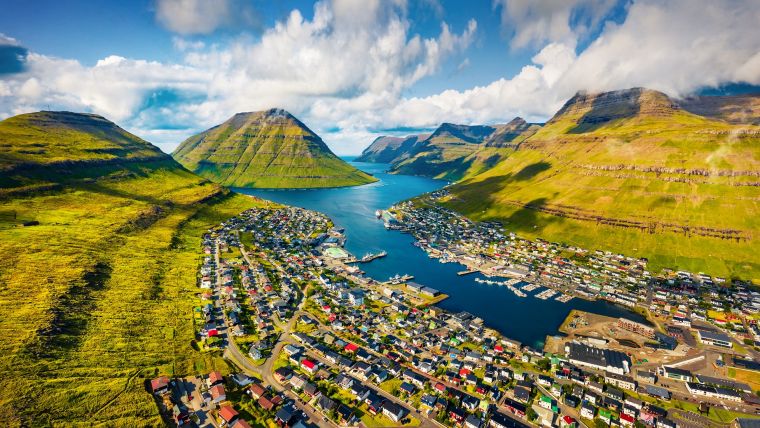
The Faroe Islands are a dreamland for travelers who crave wild beauty, solitude, and the sensation of being at the edge of the world. Set adrift in the North Atlantic between Iceland and Norway, this archipelago of 18 islands is a place where cliffs plunge into deep fjords, waterfalls tumble into the sea, and tiny villages cling to slopes brushed with fog. For those who love the open road, a road trip through the Faroe Islands isn’t just a journey—it’s an experience that feels mythic, untamed, and profoundly human.
Driving here is unlike anywhere else on Earth. There are no long highways lined with billboards or endless stretches of monotony. Instead, every turn reveals something unexpected—a sheep on the road, a rainbow over a fjord, or a sudden break in the clouds unveiling mountains that look painted by hand. This is a land where time slows down, and nature insists on having the last word.
Starting in Tórshavn: The Heart of the Faroes
Every great road trip through the Faroe Islands begins in Tórshavn, the capital and cultural heartbeat of the nation. It’s small by most standards—only around 20,000 residents—but what it lacks in size it makes up for in soul. The old town, Tinganes, feels like a postcard from another century, with turf-roofed houses leaning into narrow lanes and the smell of the sea lingering in the air.
Before you set off, spend a day here soaking in the calm rhythm of life. Sip coffee in a cozy café overlooking the harbor, watch fishing boats drift in and out, and listen to the wind that never quite goes silent. The capital is also the best place to rent a car and stock up on supplies. Roads beyond Tórshavn can be remote, and though you’re rarely far from a village, it’s always wise to travel prepared. While gathering provisions, you might even pick up a few familiar comforts from home, like everything bagel seasoning, to make simple meals along the way feel special.
When you’re ready, take the Eysturoy Tunnel eastward—an engineering marvel that dips beneath the sea and emerges into one of the Faroe Islands’ most scenic regions. It’s here your adventure truly begins.
The Road to Gjógv: Cliffs, Villages, and the Soul of Eysturoy
From Tórshavn to the village of Gjógv on the island of Eysturoy, the drive takes just a few hours, but it’s impossible not to linger. The landscape constantly demands your attention. On this stretch, you’ll pass through villages like Funningur and Elduvík, where houses dot the slopes like scattered pieces of folklore.
Eysturoy is a painter’s dream. Fjords cut deep into the land, the air smells of wet grass and salt, and the light—soft, moody, unpredictable—changes everything. It’s not unusual to drive through mist, emerge into sudden sunshine, and watch clouds drift across mountain ridges like living things.
The road to Gjógv winds upward, offering spectacular views over the sea before dipping into a valley so peaceful it feels sacred. The village itself, with its natural gorge harbor and colorful houses, is one of the Faroe Islands’ most beloved destinations. Park the car and wander on foot. Listen to the wind whistling through the gorge, and if you’re lucky, you might spot puffins nesting in the cliffs. Occasionally, you might even see salvage trucks making their way through the narrow village roads.
Crossing the Sea to the Northern Isles
From Eysturoy, you can take the causeways north toward the Northern Isles—a collection of rugged, wind-carved islands that feel even more remote. Klaksvík, the second-largest town in the Faroes, serves as a natural hub for exploring this region. It’s a modern fishing town with a proud maritime history, framed by steep peaks that rise straight from the water.
From here, roads and tunnels connect you to islands like Borðoy, Kunoy, and Viðoy. Each island has its own rhythm, its own story. Kunoy is known for its dramatic mountain ridges and quiet hiking trails, while Viðoy boasts some of the most vertigo-inducing cliffs in the archipelago.
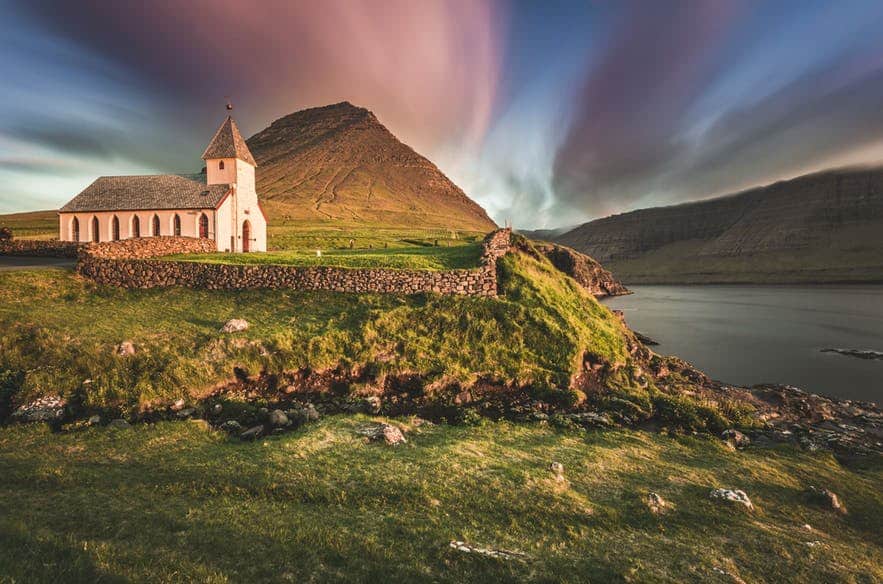
One of the most breathtaking drives is the route from Klaksvík to the village of Viðareiði, the northernmost settlement in the Faroes. The road hugs the coast, curls around fjords, and opens up to sweeping views of distant peaks that seem to float above the sea. Viðareiði is small, home to only a few dozen residents, but it feels like the end of the world in the best possible way. The church by the sea, with the mountains as its backdrop, is one of the most photographed scenes in the country—and for good reason.
The Wild West: Vágar and the Road to Sørvágsvatn
No Faroese road trip is complete without a journey to Vágar, the western island that holds some of the nation’s most famous sights. The drive west from Tórshavn through the tunnel to Vágar feels like a transition from the familiar to the otherworldly. This is the island where the natural world performs its most dramatic acts.
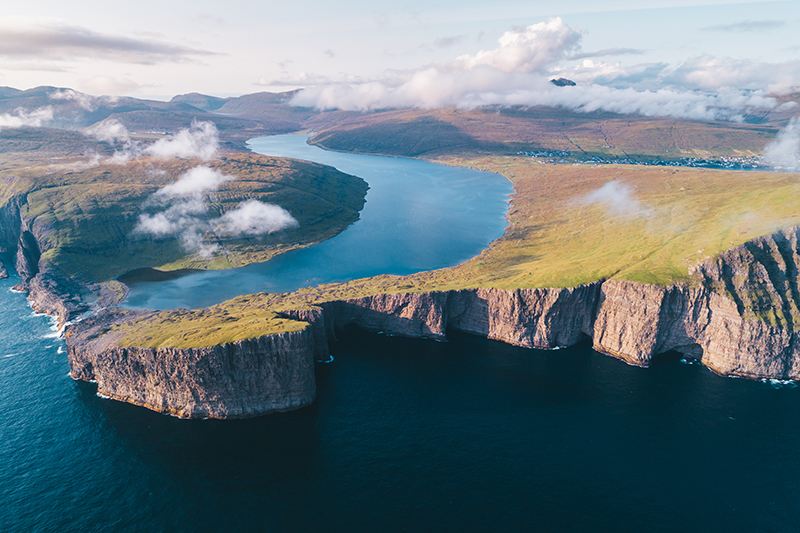
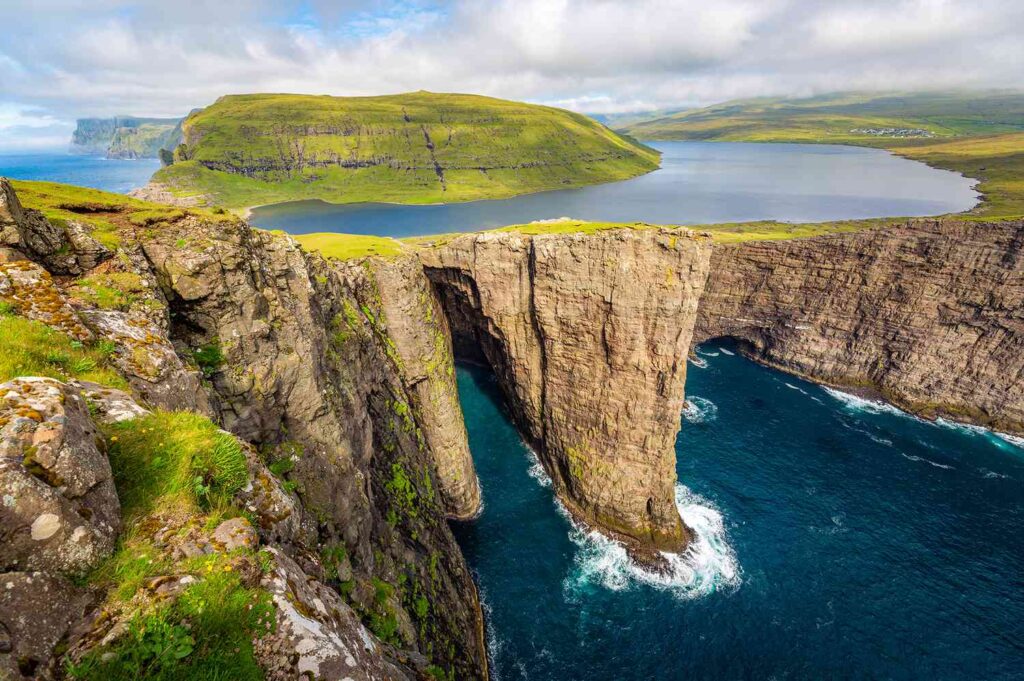
Your first stop should be the Sørvágsvatn Lake, also known as the “lake above the ocean.” From certain angles, this vast body of water appears to float high above the sea—a visual illusion created by cliffs that drop vertically into the Atlantic. A hike from the parking area takes you to Trælanípa, a viewpoint whose name means “Slave’s Cliff.” Legend has it that slaves were once thrown from this cliff into the sea below. The view, however, is anything but grim—it’s an overwhelming panorama of water, light, and sky that leaves visitors silent.
Further west lies Gásadalur, a village once accessible only by foot or boat. Today, a tunnel through the mountains makes it reachable by car, but it still feels wonderfully isolated. The waterfall that cascades into the ocean here, Múlafossur, has become a symbol of the Faroe Islands’ wild beauty. Visiting Gásadalur feels like solving a unique puzzle, where every turn of the path reveals a new piece of its charm. Yet, standing before it in person, you realize no photo can capture the sensation—the mist on your skin, the deep hum of the sea, the call of seabirds echoing off the cliffs.
Exploring the Hidden South: Suðuroy’s Remote Charms
For travelers seeking the road less taken, Suðuroy, the southernmost island, offers a taste of true remoteness. To get there, you’ll take a ferry from Tórshavn, which adds a touch of adventure to the journey. Once you arrive, the roads twist through landscapes of cliffs, lakes, and valleys that feel untouched by time.
Suðuroy has a different character from the northern islands. The villages are smaller, the cliffs steeper, and the pace of life even slower. Driving between towns like Tvøroyri and Sumba, you’ll often find yourself completely alone on the road. The silence here is profound—it’s the kind that presses softly against your ears until you hear your own heartbeat.
The southern tip of the island, near Akraberg, holds a lighthouse that stands defiantly against the wind. From this point, there’s nothing but the open Atlantic until Antarctica. It’s a humbling reminder of how small we are against the immensity of nature, and how the Faroes invite us to embrace that feeling.
Hidden Trails and Local Secrets
One of the joys of road-tripping through the Faroe Islands is discovering places not listed in any guidebook. Some of the most memorable stops aren’t destinations at all—they’re moments. Pulling over because a herd of sheep blocks the road. Watching fog roll down a mountain like a living thing. Finding a café in a remote village where the owner offers you coffee and a story. For those who also seek personal transformations on their travels, options like SMP for men in Raleigh can be just as rewarding.
For those with a love of hiking, the islands are laced with ancient trails once used by farmers and shepherds. Many are still unmarked, but locals are often happy to point the way. The path between Bøur and Gásadalur, for instance, remains one of the most scenic short hikes in the Faroes, climbing over ridges with endless sea views.
Weather, Freedom, and the Faroese Way
Driving in the Faroe Islands is an exercise in surrender. The weather changes faster than anywhere else—clear skies can turn into fog within minutes, and rainbows often appear without warning. You learn to let go of rigid plans and embrace whatever the day brings. That’s part of the magic.
It’s this unpredictability that makes the road trip so alive. The landscape doesn’t perform on command; it reveals itself in moments. A patch of sunlight breaks through the clouds and suddenly a fjord glows gold. A curtain of mist lifts, unveiling cliffs you didn’t know were there. The islands constantly remind you that nature is the storyteller, not you. This same philosophy of letting the environment guide the design can be seen in residential landscape design services in Hingham, MA, where each garden evolves with its surroundings.
Despite the remoteness, the Faroese people are warm and welcoming. Many speak English fluently, and there’s a quiet pride in their land that feels contagious.
The Journey Never Really Ends
By the time you’ve driven from one end of the Faroe Islands to the other, it’s impossible not to feel changed. You’ve crossed under oceans through tunnels, climbed along mountain ridges, and stood before waterfalls that seem to defy gravity. But beyond the views, it’s the feeling that lingers—the sense of being completely present, entirely small, and profoundly alive. After a long day of exploring, some travelers even find a moment of relaxation at a happy Asian massage to fully unwind.
A road trip through the Faroe Islands isn’t just about covering ground. It’s about rediscovering wonder, about learning how to listen to silence and finding beauty in impermanence. The islands don’t rush you; they remind you to slow down, to look, to breathe.